
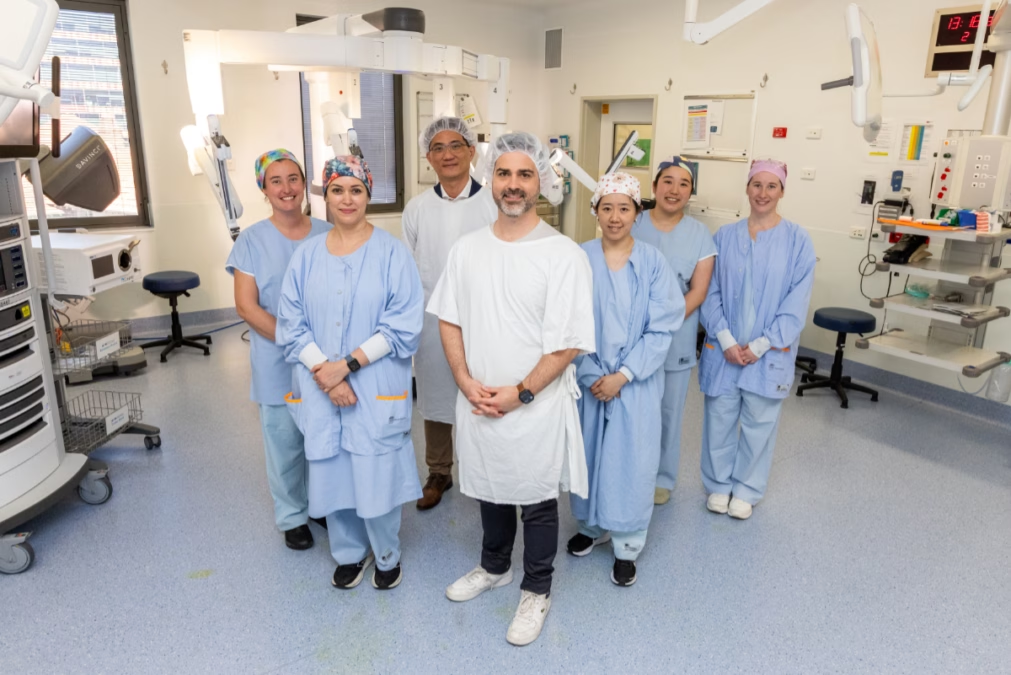
A landmark gift from the late Alexandria “Alexis” Phirros is continuing to transform local healthcare, with Royal North Shore Hospital (RNSH) celebrating a major milestone for its advanced robotic surgical program.
Just one year after the Da Vinci Xi system was acquired through a bequest from the Estate of Alexandria Phirros, the surgical robot, named Alexis in her honor, has been used in more than 150 procedures across six surgical specialties.
In Short
- Milestone Achievement: The Da Vinci Xi robotic system at Royal North Shore Hospital has completed over 150 procedures across six specialties in its first 12 months.
- Equitable Healthcare: Funded by a philanthropic bequest from the late Alexandria Phirros, the technology gives public patients access to advanced surgical care without private cover.
- Rapid Recovery: Local patient Stephen Davies returned to work within days following complex bowel surgery that also identified and removed two hidden tumours.
- Lasting Legacy: Named 'Alexis' in honour of its benefactor, the robotic console continues to elevate clinical capacity across the Northern Sydney Local Health District.
For 36-year-old local patient Stephen Davies, the clinical milestone is deeply personal.
When Stephen required bowel surgery following further investigation of a previously removed growth, he faced a choice. Without private health insurance, cutting-edge robotic-assisted surgery would typically be out of reach. However, because RNSH holds the Alexis system within the public health network, Stephen was able to choose a robotic theatre slot to support a faster recovery.
During the operation, RNSH Consultant Colorectal Surgeon Associate Professor Kah Hoong Chang and his team discovered and removed two additional small tumours.
“When I was wheeled into the room, I looked over at the machine and thought about this woman I would never meet, but whose generosity was directly helping me at one of the most frightening moments of my life,” Stephen recalled.
His surgery was a success, allowing him to return to work within just a few days. Moved by the experience, Stephen later penned a heart-felt letter to Alexandria’s family and friends.
“Alexis’ gift was not just a large and generous donation,” Stephen wrote. “It became something very real: less disruption, a faster recovery, and a better chance to get back to normal life.”
Precision Care Across Six Specialities
The Da Vinci Xi robotic system is operated directly by a surgeon from an interactive console, utilising high-definition 3D magnification and four articulated robotic arms.
At RNSH, the Alexis system is now deployed across six key surgical areas: colorectal surgery, upper gastrointestinal surgery, urology, cardiothoracic surgery, gynaecology, ear, nose and throat (ENT) surgery.
Associate Professor Chang highlighted the tactical advantage the system offers in the operating theatre.
“Alexis gives us improved 3D vision, unrestricted instrument movement and pinpoint precision,” A/Prof Chang explained. “In Stephen’s case, that gave us an extra advantage in a highly specialised operation and contributed to an excellent surgical outcome and recovery.”
Dr Kai Brown, Head of Department of Robotic Surgery at RNSH, emphasised that philanthropy is filling a critical equity gap in public medicine.
Dr Brown said. “Alexis exists because of philanthropy, helping make this technology available to patients who might otherwise not have been able to access it.”
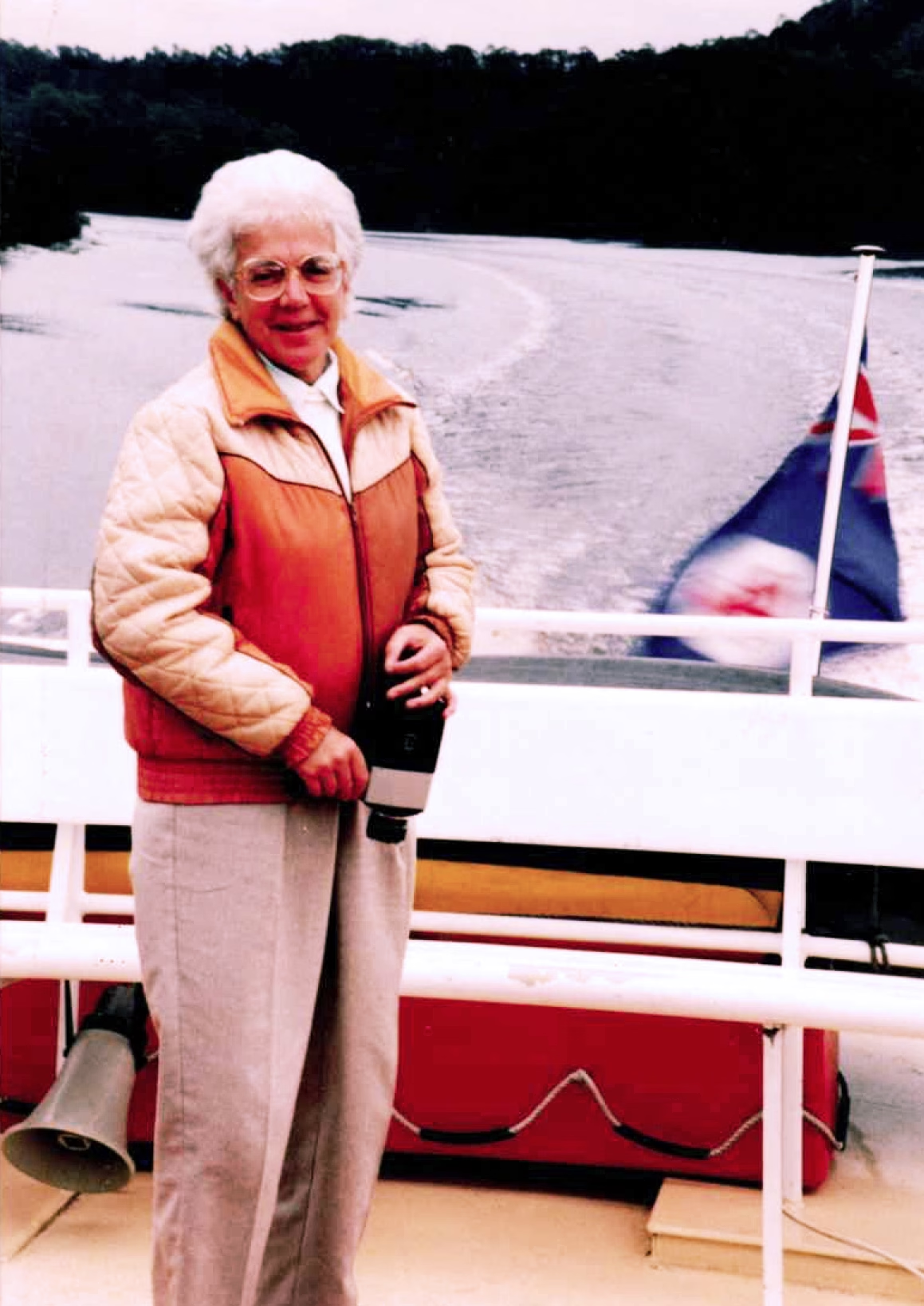
Alexandria Phirros passed away at age 89 following a battle with pancreatic cancer. Years prior, she had been successfully treated for throat cancer at RNSH and maintained a profound gratitude for the care she received. Her bequest through the NORTH Foundation, the official charity partner of Northern Sydney Local Health District, turned that gratitude into lasting medical innovation.
NORTH Foundation CEO Gil Lorquet said Stephen’s letter captured the true spirit of community philanthropy.
“Stephen’s letter brings philanthropy full circle: Alexandria’s decision became a vital piece of surgical technology, that technology became part of Stephen’s care, and Stephen then wrote to thank the people who loved her,” Mr Lorquet said.
For Stephen, Alexandria’s gift will never be forgotten.