



- Cathy Foley framed the energy transition as a matter of economic sovereignty.
- Renewables are already the cheapest energy source available by a significant margin.
- Small businesses will see mandatory climate reporting effects by July 2026.
- Foley urged businesses to map energy costs and plan for decarbonization now.
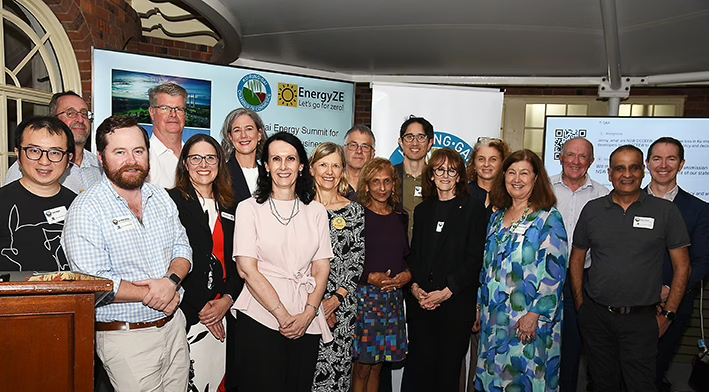
On Wednesday, 8 April, I had the pleasure of attending the Community and Business Energy Summit. This significant event was a collaborative initiative between the Ku-ring-gai Chamber of Commerce and EnergyZE North Shore Inc., supported by a Ku-ring-gai Council Net Zero Grant.
The evening brought together a diverse group of local leaders and sustainability experts to explore how the clean energy transition is reshaping our economy and community. It offered practical insights into the energy transition at a local level and highlighted some of the risks and opportunities.
A major highlight was the keynote address by Cathy Foley, former Chief Scientist of Australia, titled “Energy Strategy for a Changing Economy,” which framed the transition not as a values issue, but as a vital matter of economic sovereignty.
Foley emphasised that Australia possesses the vast resources needed to become a renewable energy superpower. While storage remains a hurdle, the pace of development is exceeding expectations, and renewables are already the cheapest energy source available by a significant margin. Interestingly, while some key technologies may not be fully realised until 2040, the shift is already driving productivity through initiatives like the Future Made in Australia Plan.
What This Means for Local Business
A portion of the summit focused on the new Mandatory Reporting Requirements for businesses.
While large entities began reporting on climate-related risks in January 2025, smaller businesses will see flow-through effects by July 2026 and 2027. Foley urged the business community to “get on the front foot” by:
Understanding current energy costs and carbon footprints.
Creating a plan to decarbonise, not all at once, but at the appropriate time.
Connecting with stakeholders to build resilient supply chains.
Panelists included Dr Kate Wilson, Climate and Sustainability Advisor, Tim Buckley, Climate Energy Finance, Rod Sharples Community Advocate. Nicolette Boele, Federal Member for Bradfield was the Moderator for the event.
The success of the summit is a testament to the leadership of Adrienne McLean, President of the Ku-ring-gai Chamber of Commerce. Her focus on topics relevant to both business growth and sustainable development has truly revitalised the Chamber.
McLean’s leadership of the Ku-ring-gai Chamber has seen membership grow significantly in recent years.
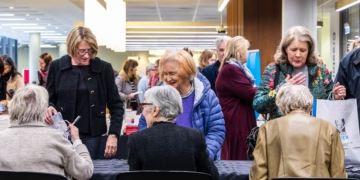
Locals in attendance asked a range of questions such as ‘Is there a way to insulate your house without renovating’, to ‘are community batteries still government policy and are there plans for Ku-ring-gai’. Mr Peter Vun, Energy & net Zero Strategy also spoke about Ku-ring-gai Councils broader initiatives.
As we look toward the future, it is clear that clean, green energy is a sovereign asset for Australia.
Whether you are a small business owner or a resident, embracing this transition offers a pathway to save costs while contributing to a sustainable local legacy.
It was wonderful to see Ku-ring-gai Council supporting this event and considering the various ways they can support not only residents in their community but also small businesses with energy transition and there were several Councillors in attendance.
It was a great community event with a focus on hyperlocal initiatives and connecting business and community.
Be part of the growing Ku-ring-gai Chamber of Commerce now!



