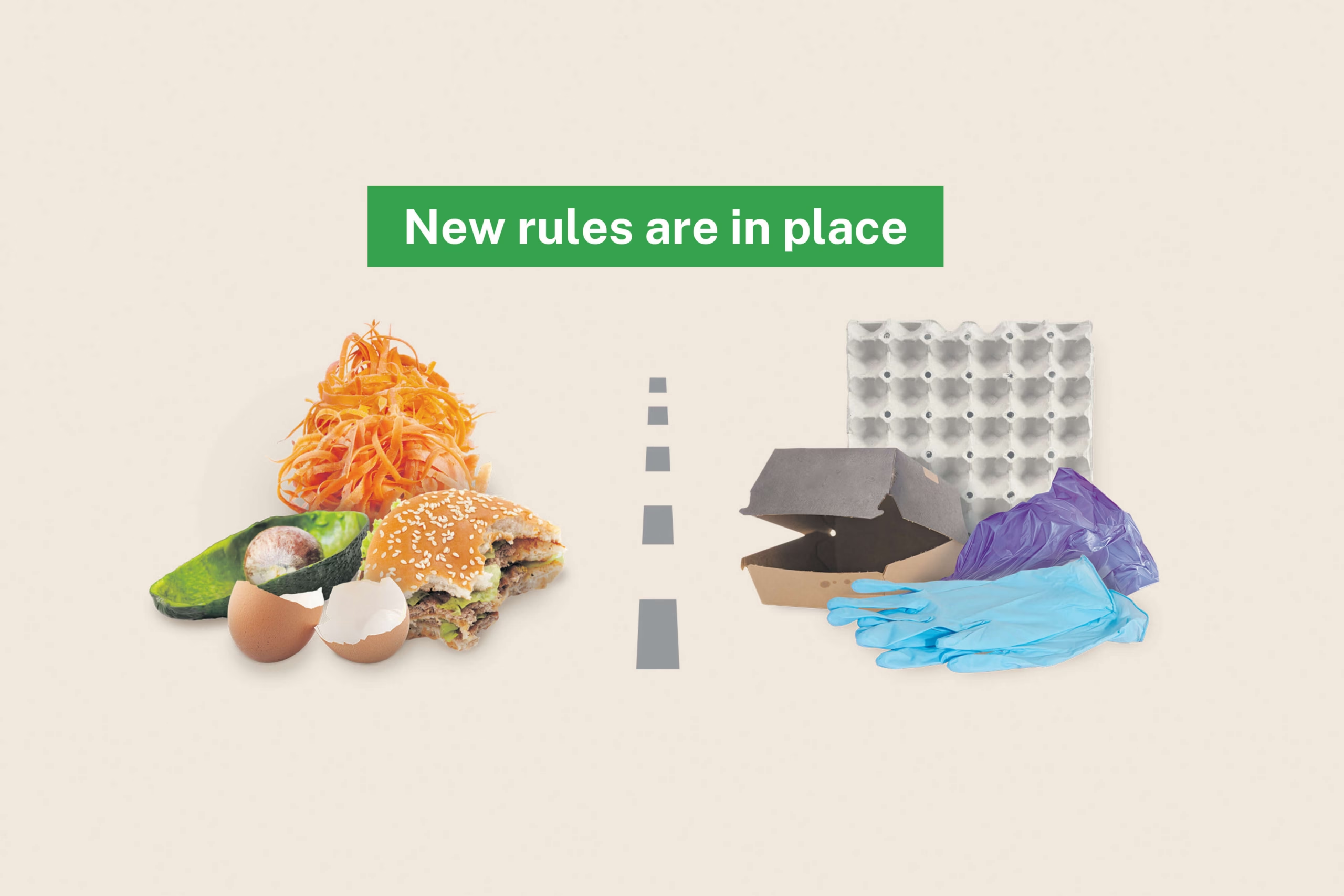
Since 1 July 2026, NSW’s new food-waste rules have started taking effect for large supermarkets, hospitality businesses such as hotels, cafes and restaurants, and certain institutions, requiring eligible operators to separate food waste from general waste.
The requirements are being introduced in stages, based on the amount of general waste a business generates each week.
The penalties can be significant: businesses and councils can face maximum penalties of up to $500,000, plus $50,000 for each day a continuing offence occurs, although the NSW EPA says enforcement will take into account practical issues such as service availability and exemptions.
In Short
- As of 1 July 2026, large supermarkets, institutions, and hospitality businesses in NSW are required to separate food waste from general rubbish.
- The EPA is enforcing a staged rollout based on general waste volume, with severe maximum penalties of up to $500,000 for non-compliance.
- Food waste costs the Australian economy over $36.6 billion annually, accounting for an average of 5.6% of a business's total sales.
- Sydney-based Orison Tech is offering eligible local businesses a free trial of its Food Waste Intelligence platform to track spoilage and reduce overheads.
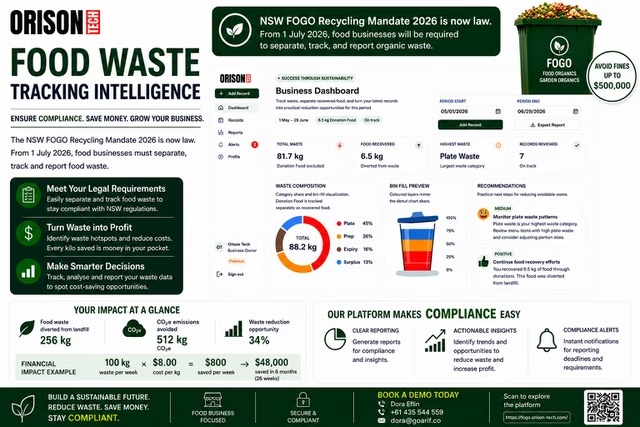 The rollout is staged by weekly residual waste capacity, with further thresholds coming in 2028 and 2030, giving businesses time to adjust.
The NSW EPA has indicated enforcement will take practical issues like service availability into account, and exemptions are available.
For businesses willing to get ahead of the change, there’s genuine upside. Australia wastes around 7.6 million tonnes of food a year, costing the economy over $36.6 billion and generating an estimated 17.5 million tonnes of CO2 emissions, roughly comparable to the annual emissions of around 4 million cars. End Food Waste Australia reports food waste costs businesses an average of 5.6% of total sales, meaning better tracking often pays for itself.
Sydney-based Orison Tech has built a Food Waste a Intelligence platform to help businesses see exactly where waste happens, from preparation and plate waste to spoilage and surplus, and turn that insight into savings.
“Businesses shouldn’t have to choose between compliance and commercial outcomes,” said founder Dora Eflin. “Once organisations can see where waste is occurring, they can reduce costs, recover food and make better decisions.”
Orison Tech is inviting eligible local businesses to trial the platform free of charge.
Trial Food Waste Intelligence Free
Orison Tech is inviting eligible local businesses to trial their platform free of charge to help reduce costs, recover food, and manage compliance.