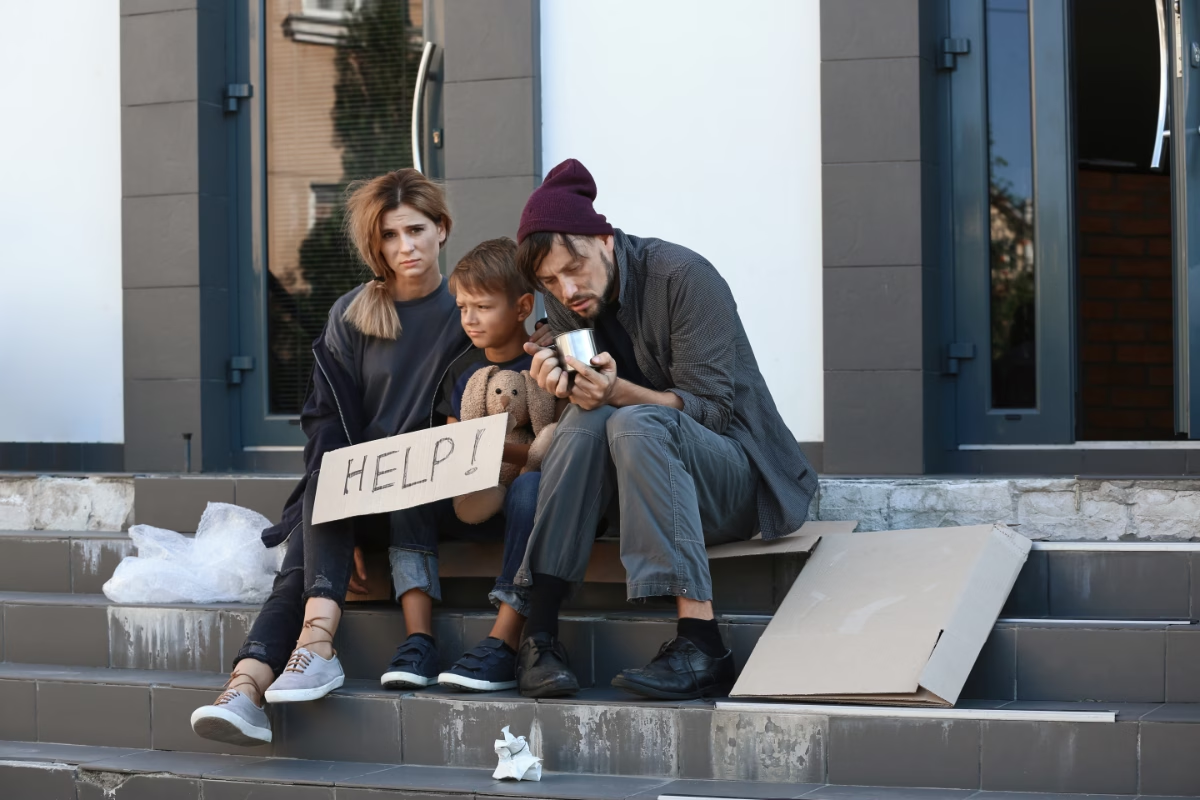
3.7 million people, including more than 750 000 children under 15 are reportedly below the poverty line as of 2026 in Australia, according to estimates. Unofficial estimates – Australia still lacks any official form of poverty statistics, despite its growing impact on the populace and frequent calls to action.
When compared to the most recently available information (2022-3) these numbers mark an increase in poverty rates from 2020-21, wherein 1 in 8 people were reported below the poverty line, compared to 1 in 7 now.
In Short
- Legislative Action Demanded: St Vincent de Paul has labelled the lack of official poverty measures a "national disgrace," urging the Albanese government to establish standard indicators during Anti-Poverty Week.
- Childhood Hardship Hidden: An estimated 3.7 million Australians—including over 750,000 children—live in poverty, with charities warning that income-only measures understate hardship for minors.
- Widening Regional Divide: Research highlights stark socioeconomic contrasts across Sydney, with child poverty exceeding 40% in parts of Western Sydney while remaining under 4% in coastal and North Shore precincts.
- Middle Income Impact: The escalating cost of living has dragged middling income households into financial distress, with one in three impoverished households newly impacted in recent years.
The St Vincent de Paul Society of Australia has put its foot down this year, and says that the Government needs to take legislative action to fix the gaps in recorded knowledge, and set national reduction goals this Anti-Poverty Week, calling their lack of action a “national disgrace”.
Anti-Poverty Week, established in 2002 by Professor Julian Disney and the UNSW Social Justice Project, is a national campaign that runs from the 11th to 17th of October each year that hopes to raise awareness and solve issues of poverty in Australia.
St Vincent de Paul has taken particular aim at the issues a lack of recorded statistics has and will continue to cause for children.
“Children do not earn an income, so unofficial measures focused only on household income can hide or understate the hardship they experience.
“We need standard indicators that show whether children have enough food, a secure place to live, access to education and health care, and the chance to participate in their community.”
Australia is one of the only wealthy nations in the world to not have a measurement method for poverty. This year isn’t the first that the Government has been urged to make a change. Last year, on the 50th Anniversary of the establishment of Henderson’s Poverty Line, the executive director of The Brotherhood of St. Laurence, Dr Travers McLeod made a statement urging the Albanesegovernment to update their practice to international standards.
“This is a chance to align with international best practice and show we are serious about tackling poverty in all its forms. Australia’s economic compass is incomplete without official poverty measures.”
According to research undertaken by NCOSS in 2023, the areas in which poverty is most prevalent are those within Western Sydney suburbs such as Ashcroft, Bubsy and Miller, which affected almost a third of the population. Conversely, those closer to the coast had low and dwindling rates – suburbs like Greenview and Riverview had levels as low as 3.67%. The suburbs with the highestpoverty rates for children are also in the west, with rates of 41% in South Granville and 38% in Auburn.
As the cost of living continues to rise, households within middling income brackets have also begun to be pulled intopoverty. According to a 2026 report from NCOSS, 1 in 3 households in poverty had only been pushed into it in the past few years.
These reports will come as no surprise to those familiar with the conceptual socioeconomic divider of The Latte Line (known also as the Red Rooster Line), which divides Western Sydney into two separate halves: those above the line, and those below. According to economic commissioner of the Greater Sydney Commission Geoff Roberts in 2016, those above the line in thenorth are the “haves”, and those below the line in the south – the “have-nots”, with “have” being understood as being in a position ofopportunity and comfortable living. The North Shore, and like areas, sit firmly above The Latte Line.
St Vincent de Paul hopes that this year, the federal government will make a change for the better.
“Poverty in Australia is not inevitable. But it will require a clear national commitment, official measures of poverty, meaningful targets and practical investment.”
📢 Anti-Poverty Week 2026: October 11 – 17
This year marks the 24th year of taking action against poverty and hardship in Australia. Join the movement to raise awareness, host an activity, and advocate for change. Every voice helps make a difference!
Find out how you can get involved at antipovertyweek.org.au.